
Rediscover the True Catholic Meaning of Beauty
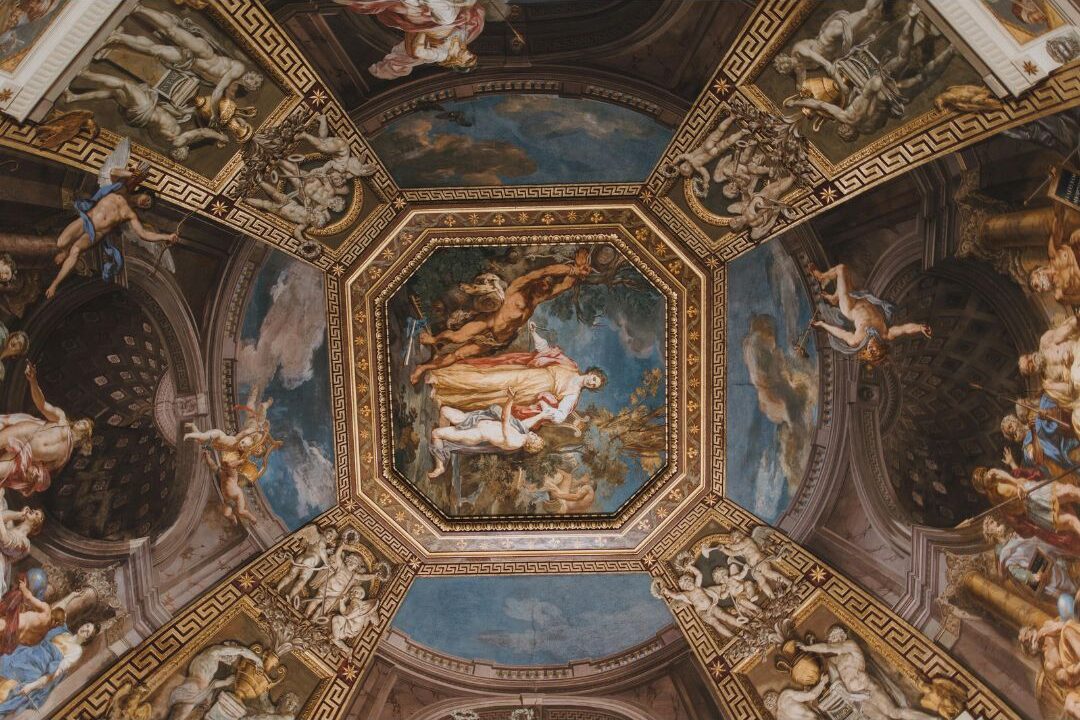
Can families truly rediscover the true Catholic meaning of beauty? In today’s culture, beauty is everywhere, and yet it often feels strangely empty.
We are surrounded by images promising beauty: curated social media feeds, advertisements for skincare and fashion, endless advice on how to look younger, slimmer, or more polished. From a young age, children absorb the message that beauty is something to achieve through appearance, popularity, or possessions.
But the more our culture talks about beauty, the more it seems to lose sight of what beauty actually is.
The Catholic tradition offers a far deeper and more satisfying vision. The Catholic meaning of beauty is not rooted in vanity or comparison. Instead, beauty is inseparable from truth and goodness, reflecting the order and love placed in the world by God Himself.
When families rediscover this vision of beauty, it becomes a powerful way to evangelize—not only the world around them, but their own children.
The Catholic Meaning of Beauty: Truth, Goodness, and God
In Catholic thought, beauty is not merely subjective preference or personal taste. Beauty is one of the fundamental ways that God reveals Himself in creation.
Philosophers and theologians throughout the Church’s history have described beauty as inseparable from truth and goodness. These three realities, sometimes called the transcendentals, are different ways that human beings encounter God. Wherever something is truly good or truly true, beauty is never far behind.
This understanding appears throughout the Church’s teaching on creation. The world is not random or meaningless; it was lovingly created by God and therefore bears traces of His wisdom and order. Because of this, the beauty we encounter in nature, art, music, and even human relationships can become a pathway to encountering the Creator.
The Church speaks directly about this connection between creation and beauty in the Catechism of the Catholic Church, which explains that the harmony and order of the created world reflect the wisdom and goodness of God. When we recognize beauty in creation, we are glimpsing something of the Creator Himself.
This is why the Church has always taken beauty seriously. For centuries, Christians have expressed their faith through sacred architecture, painting, sculpture, music, and liturgy. Cathedrals were built to lift the eyes toward heaven. Sacred music was composed to help the soul pray. Even the careful gestures and symbolism of the Mass communicate the beauty of divine worship.
Beauty has never been treated as an optional decoration of the faith. Rather, it is a way that the human heart is drawn toward God.
For children growing up today, this vision of beauty is both deeply attractive and surprisingly countercultural.
Why Our Culture’s Beauty Obsession Leaves Families Empty
Although modern culture constantly talks about beauty, it often reduces beauty to something extremely narrow: appearance.
Children grow up surrounded by images that suggest beauty must be achieved through perfection—perfect bodies, perfect homes, perfect vacations, perfect photos. This constant comparison can lead not to joy, but to anxiety and dissatisfaction.
Parents see the effects of this everywhere. Young people struggle with self-worth. Social media encourages constant comparison. Even adults can find themselves quietly measuring their lives against unrealistic standards.
Many Catholic writers and thinkers have observed that when beauty becomes detached from truth and goodness, it easily becomes distorted. Articles and reflections from organizations like EWTN have frequently explored how modern culture’s obsession with appearance leaves people restless and dissatisfied, because it substitutes superficial attractiveness for authentic beauty.
The problem is not that beauty matters too much in our culture.
The problem is that we have forgotten what beauty truly is.
Authentic beauty does not make us feel smaller or inadequate. It does not demand constant improvement or comparison. Instead, real beauty lifts the soul. It invites wonder, gratitude, and peace.
A breathtaking sunset, a beautifully celebrated Mass, the quiet tenderness of a mother caring for her child, these moments remind us that beauty is something we receive, not something we manufacture.
When families rediscover the deeper meaning of beauty, they also rediscover freedom from the exhausting cycle of comparison that dominates so much of modern life.
Helping Children Recognize What Is Truly Beautiful
Parents play a crucial role in helping children see beauty through the eyes of faith.
Children are naturally drawn to beauty, but they need guidance to recognize what is truly beautiful rather than what merely attracts attention. Families can nurture this understanding in many simple ways.
Spending time in nature helps children see the beauty of God’s creation and develop a sense of wonder. Visiting beautiful churches, praying before sacred images, or listening to sacred music can awaken a love for the beauty of the faith. Even small practices at home—lighting a candle during family prayer, displaying religious art, or celebrating feast days—can help children associate beauty with the presence of God.
Parents can also strengthen this understanding by building habits of faith within the home. Many families find inspiration and practical guidance in reflections on Catholic family life and faith formation, which explore how prayer, liturgy, and daily life shape children’s understanding of truth and goodness.
Just as importantly, parents can show children that beauty is reflected in virtue. Acts of kindness, patience, generosity, and forgiveness reveal a beauty that goes far deeper than appearances. When children see these virtues lived within the family, they begin to recognize that holiness itself is beautiful.
In this way, beauty becomes part of a child’s spiritual formation.
They learn that beauty is not something superficial or fleeting. It is a sign pointing toward God.
Mary and the Beauty of a Soul Fully Given to God
Among all human creatures, the Blessed Virgin Mary reveals the deepest meaning of beauty.
The Church has long honored her with the title Mary, Mother of Fairest Love, recognizing that her beauty flows from her complete openness to God’s grace. Her humility, trust, and maternal love reflect a harmony between truth and goodness that is profoundly beautiful.
For families seeking to rediscover the beauty in the Catholic faith, devotion to Our Lady can be a powerful guide. Through Marian devotion, families learn to contemplate the beauty of a life lived entirely for God.
Mary’s beauty is not the superficial beauty celebrated by the world. It is the beauty of holiness, a life perfectly ordered toward love.
When families turn to Mary, they begin to see that true beauty Catholic tradition speaks about is always connected to grace, virtue, and the presence of God.
Rediscovering Beauty as a Path to God
In a world that often distorts beauty, Catholic families have a unique opportunity to witness to something better.
By cultivating the Catholic meaning of beauty in their homes, their prayer life, and their relationships, families help restore the true meaning of beauty in the world. Children raised in this environment learn to recognize beauty not in perfection or popularity, but in truth, goodness, and love.
When beauty is understood in this way, it becomes far more than an aesthetic preference.
It becomes a path to God.
And in a culture hungry for meaning, that witness may speak more powerfully than words ever could.