Painting Mary, Mother of Fairest Love: Q&A With Raúl Berzosa
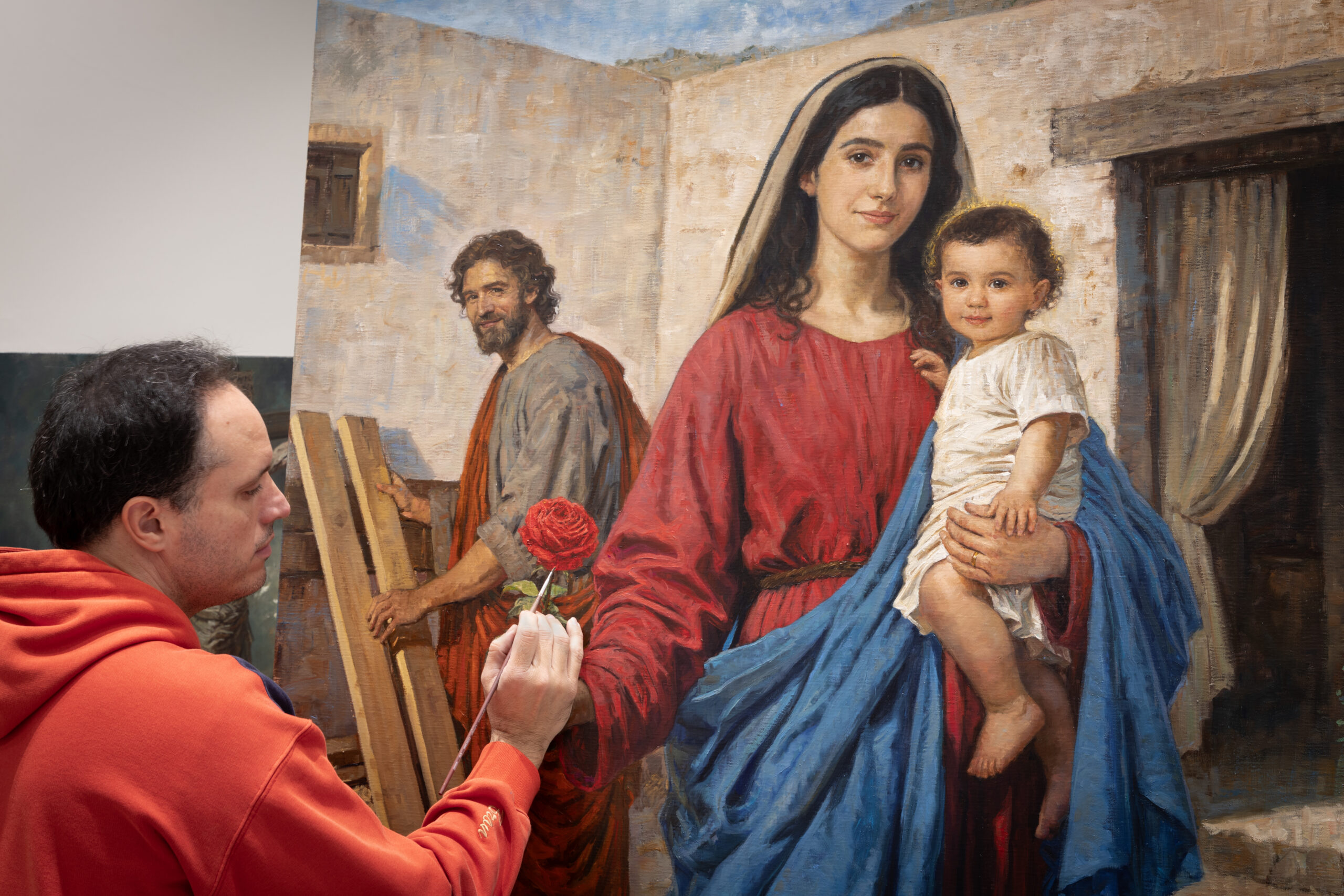
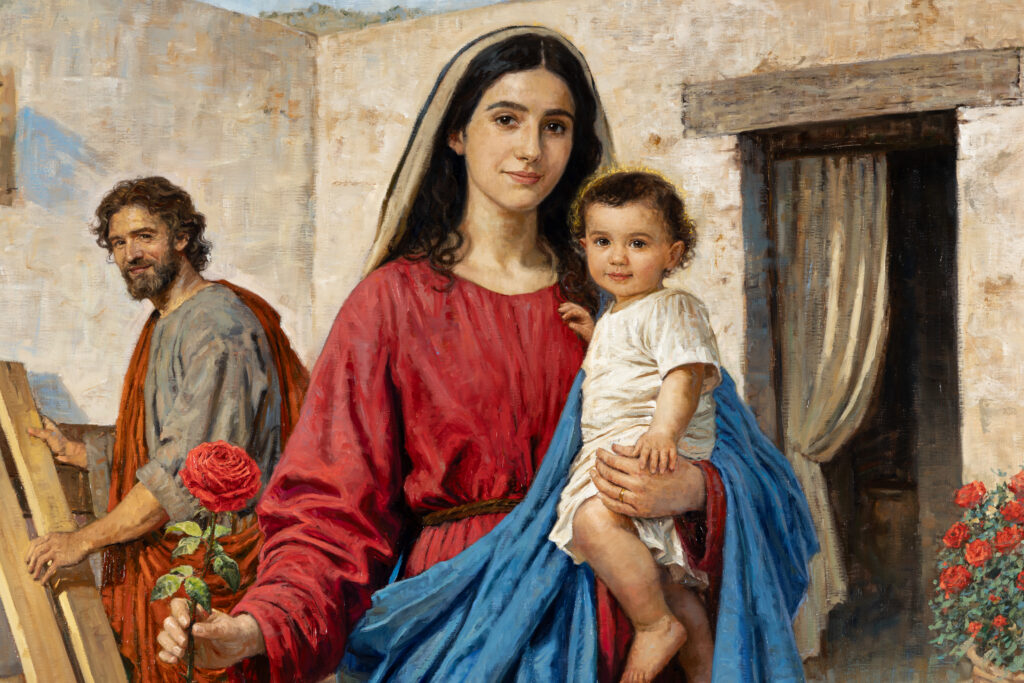
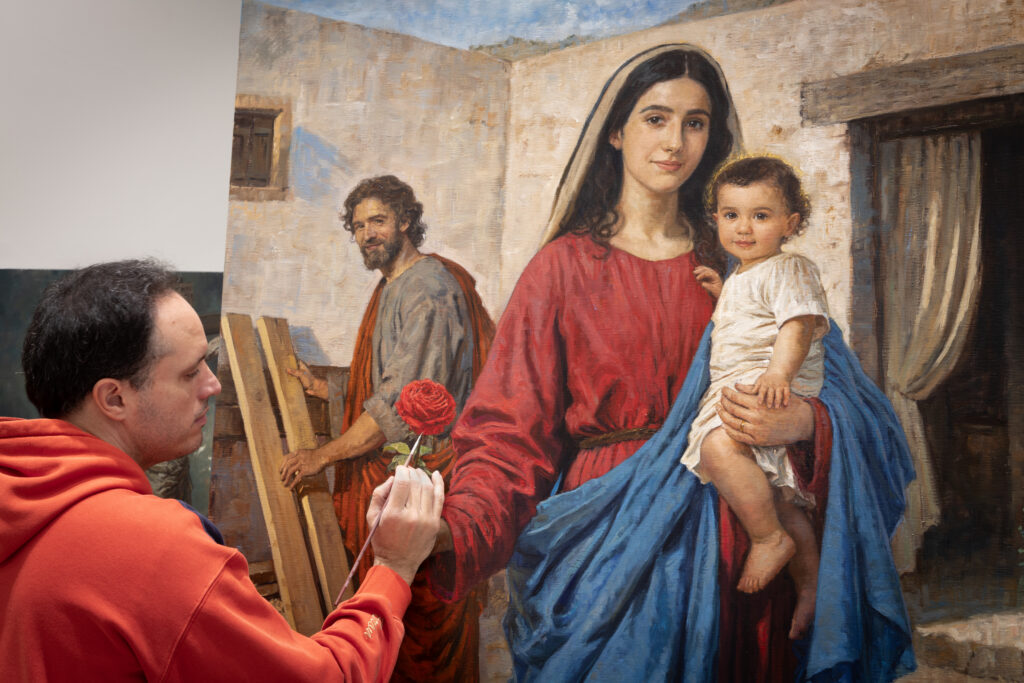
Earlier this year, we announced that we were bringing fairest love to life with a new commission of a painting of Mary, Mother of Fairest Love by world-renowned Spanish painter, Raúl Berzosa. The art piece will debut this week in Los Angeles at the Cathedral of Our Lady of the Angels from June 16-June 23. We had the opportunity to speak with Raúl about his artistic process. Get to know Raúl and everything that went into painting this intimate scene of Our Lady.
Could you share a little about your work and how you began painting sacred art, and in particular about your personal faith and devotion to Mary, the Mother of Jesus?
When I was about 12 or 13 years old, I began drawing comic books. I would sketch what I saw on television on paper. My father noticed that I had some talent for drawing, so he enrolled me in a local art workshop.
In 2000, I completed my first public painting. It was the poster for the annual procession of the Holy Week Association of El Rocío in Málaga. It was there that I painted the Virgin Mary for the first time. Those early devotional commissions allowed me to express a deep desire to create sacred art. Gradually, however, my work evolved. I stopped simply reproducing images associated with religious associations and began creating my own compositions and figures. Today, sacred art makes up by far the largest part of my artistic production.
For me, sacred art is much more than a painting specialty. I always try to create works that are useful—works that do not merely display beauty, but help people pray, reflect, and draw closer to God. One idea that has accompanied me for many years is a reflection by Pope Benedict XVI: “beauty can be a path to encountering God.” That thought is present in every project I undertake.
My Catholic faith is an inseparable part of my work. I grew up in a Catholic family, and my education was closely connected with the Marist Brothers.
Devotion to the Virgin Mary also holds a very special place in both my life and my work. Throughout my career, I have had the opportunity to portray her under many different titles and in numerous scenes. Some of the most important works I have created have Marian themes.
Ultimately, my desire as an artist is that each work may serve as a means of evangelization, strengthen the faith of those who contemplate it, and help beauty lead people to a deeper encounter with Christ and His Mother.
How do you hope your painting will affect the families and individuals who see it, helping them to love Our Lady more deeply?
I hope this painting helps families and all who contemplate it draw closer to Mary. Our Lady always leads us to Christ, and that is also the purpose of this work.
I would like those who see it to feel a sense of closeness to Our Mother. I also hope the painting encourages prayer, inspires reflection, and fosters a greater affection for the Virgin Mary. If it achieves that, I believe it will have fulfilled its mission.
As with all of my sacred art, I hope this painting serves as a tool for evangelization and helps people encounter God through beauty.
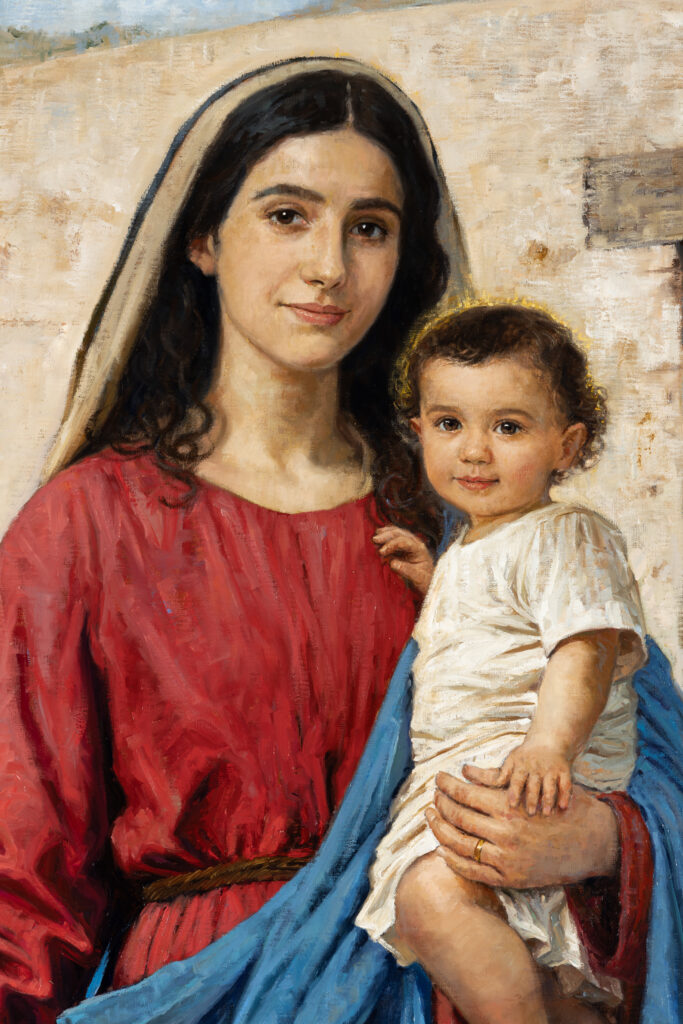
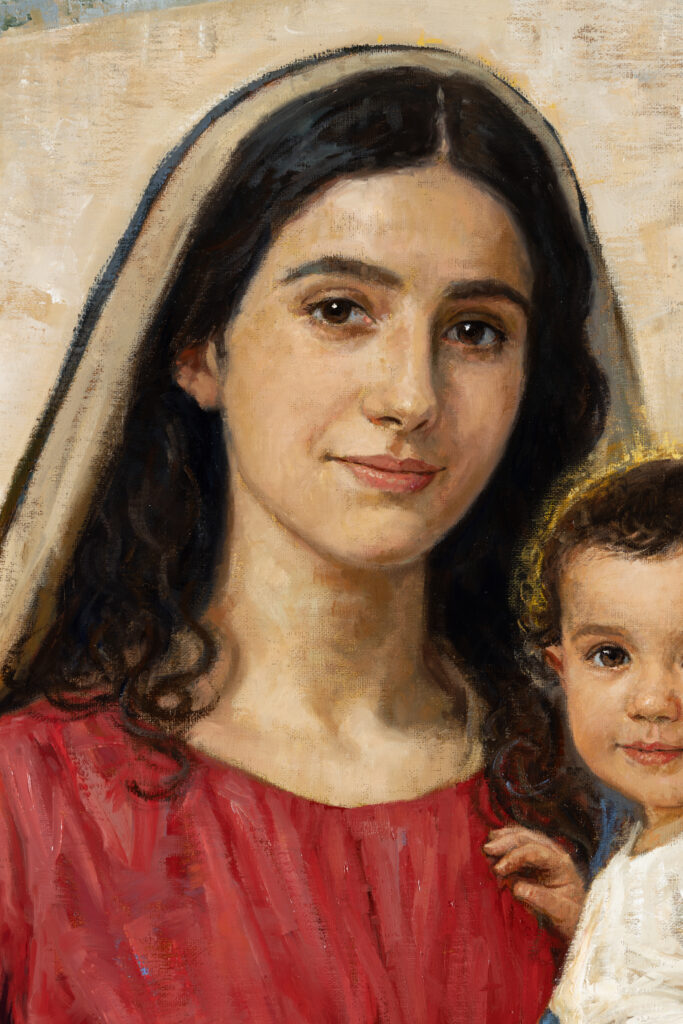
We understand that one of the first steps in creating the painting was painting Our Lady’s face. What can you tell us about that?
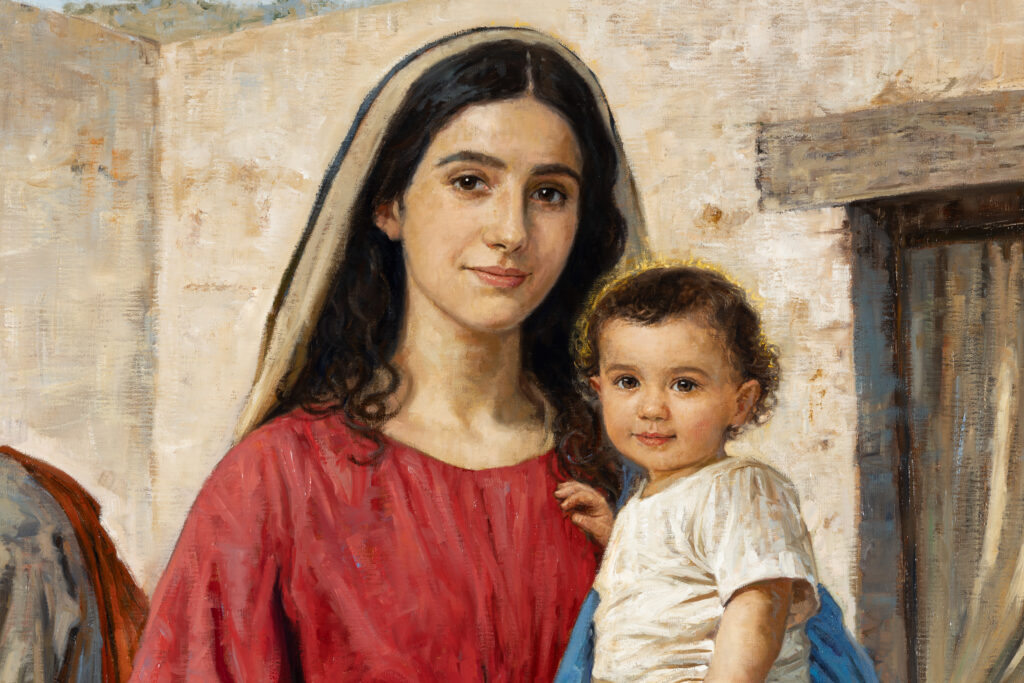
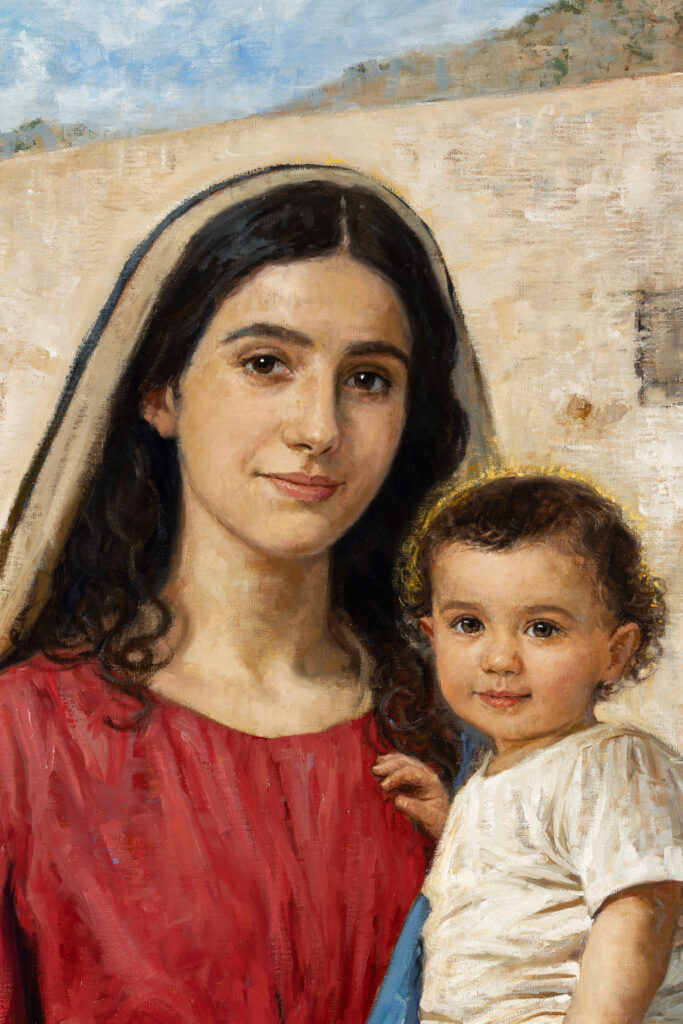
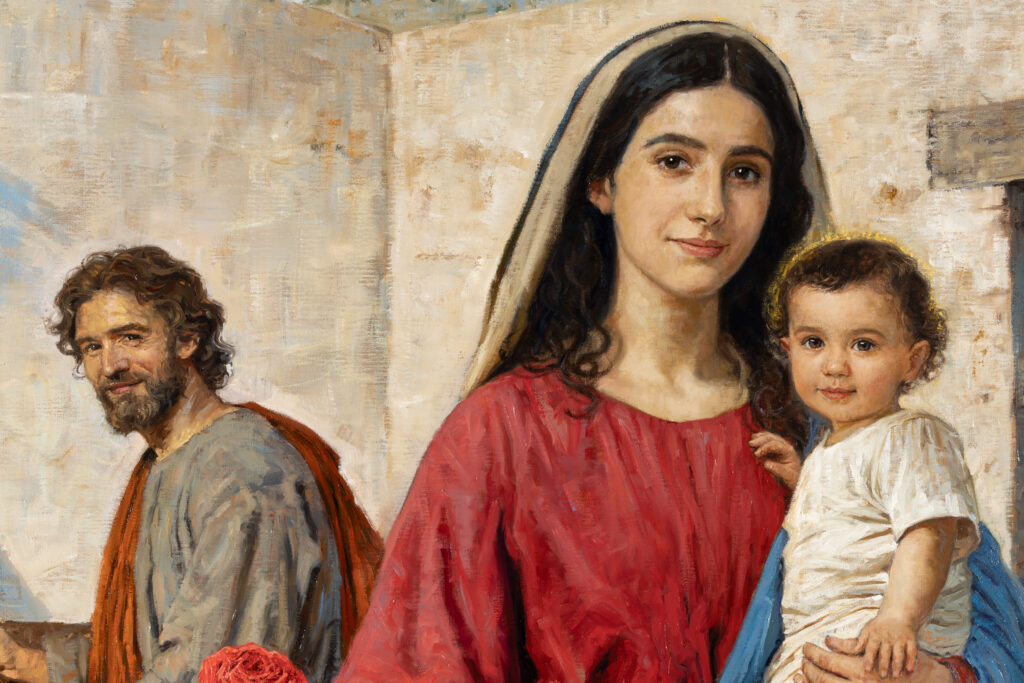
That is correct. After sketching the figures onto the canvas, I began with Our Lady’s face. When I start a painting, I usually begin with what is most important, and in a work like this, that means the faces. I like to work on those areas first because, as the painting develops, I can return to them and make subtle refinements and adjustments.
Faces are usually the most complex elements and require the greatest attention. In this particular case, however, I must say that Our Lady’s face emerged very close to its final appearance from the very beginning, so it required very few corrections throughout the execution of the work.
How do you typically research and decide on the colors and patterns of the clothing, the landscape, and other details?
I usually draw upon traditional iconography as a reference when creating my works, although I always try to bring a contemporary perspective to them. In this case, while the painting clearly draws from classical models, it also reflects a sensibility and aesthetic that belong to the twenty-first century.
As for landscapes and settings, I like to base them on real places or characteristic elements of the surroundings I am depicting. I believe this lends greater credibility to the work and helps connect the scene to reality, while preserving its spiritual character and sense of sacredness.
Could you tell us a little about the elements of the composition and what they mean to you?
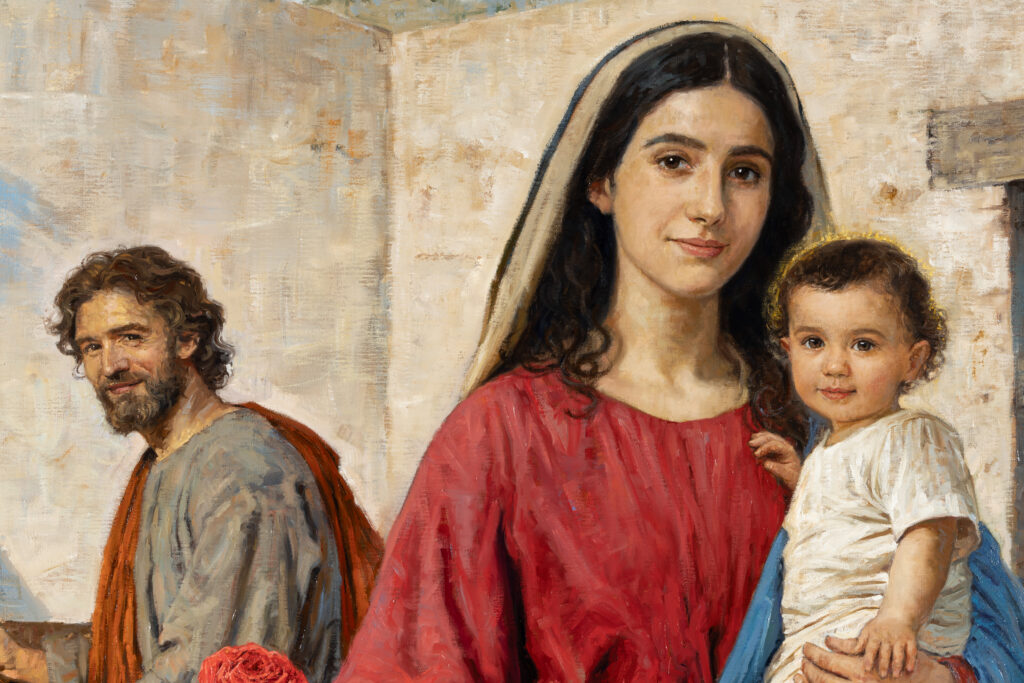
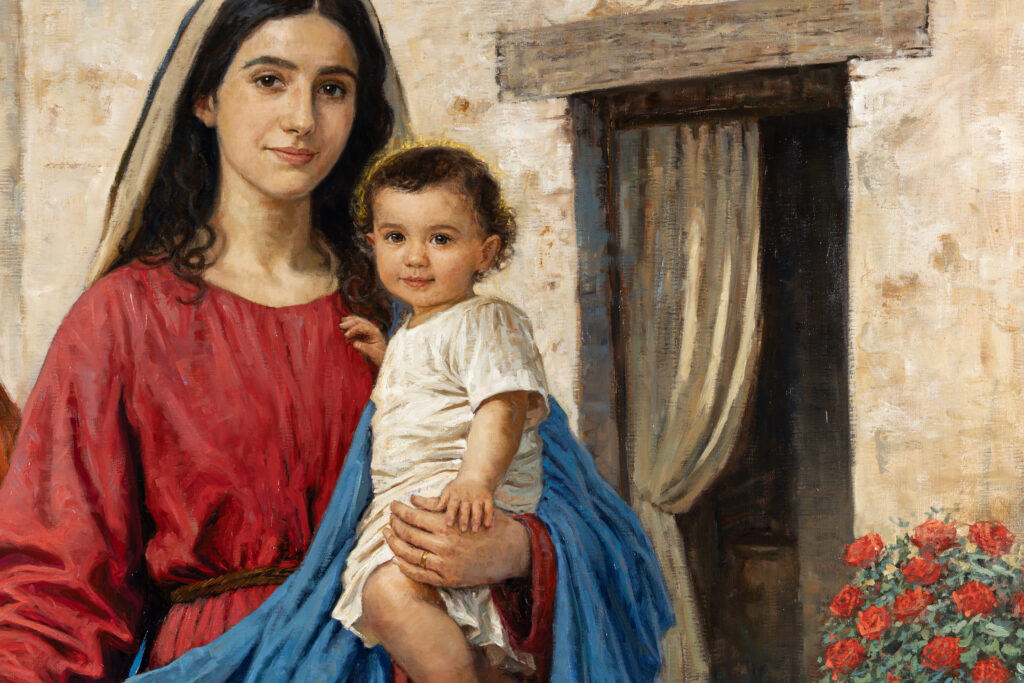
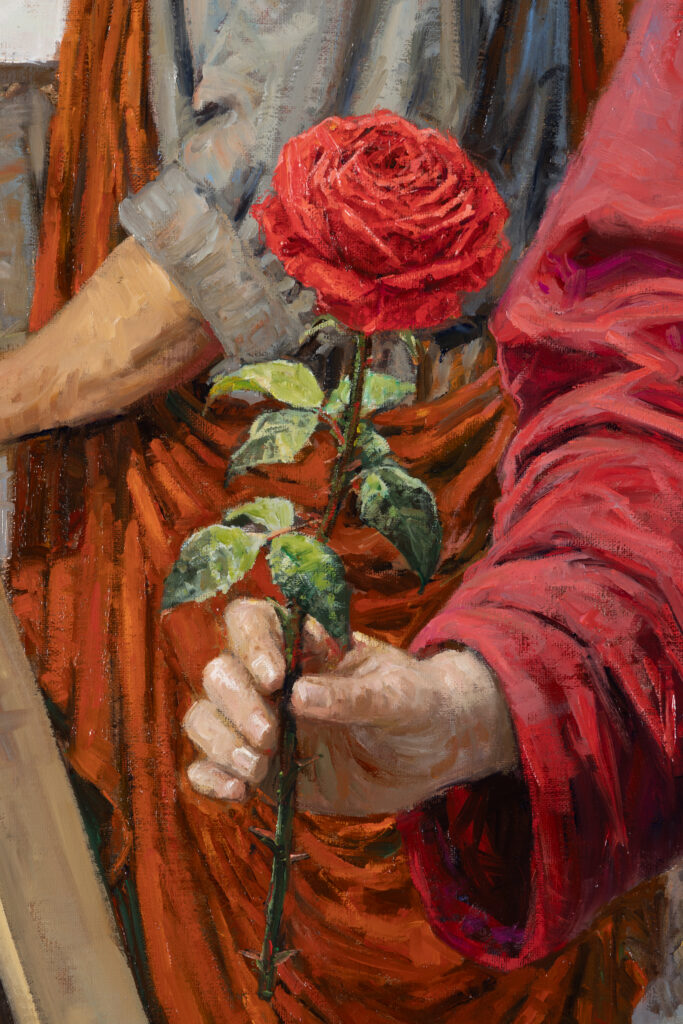
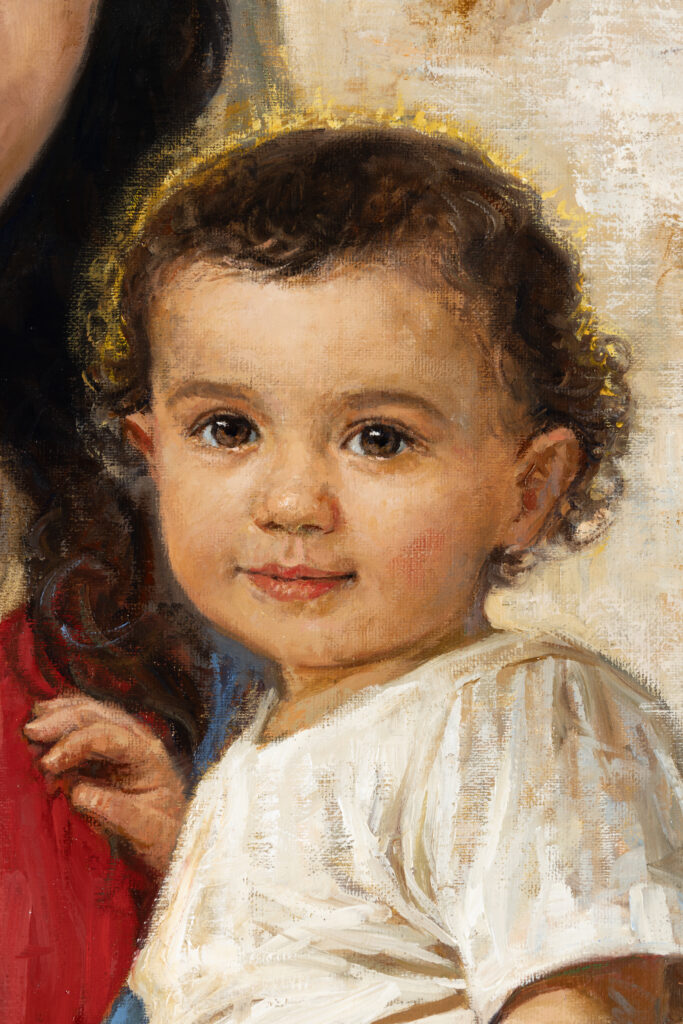
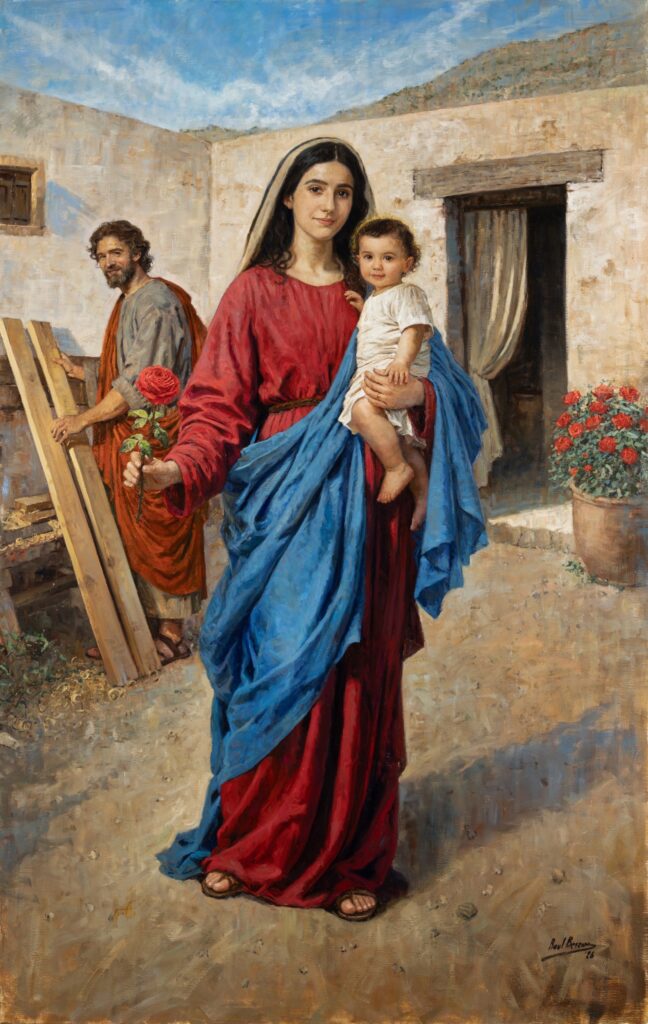
This painting depicts an everyday scene, almost genre-like in nature. Our Lady appears in the foreground holding the Child Jesus with one arm, while with the other she offers us a rose. It is a rose from the flowerpot beside the entrance to the Holy Family’s home, perhaps cut by St. Joseph himself for her.
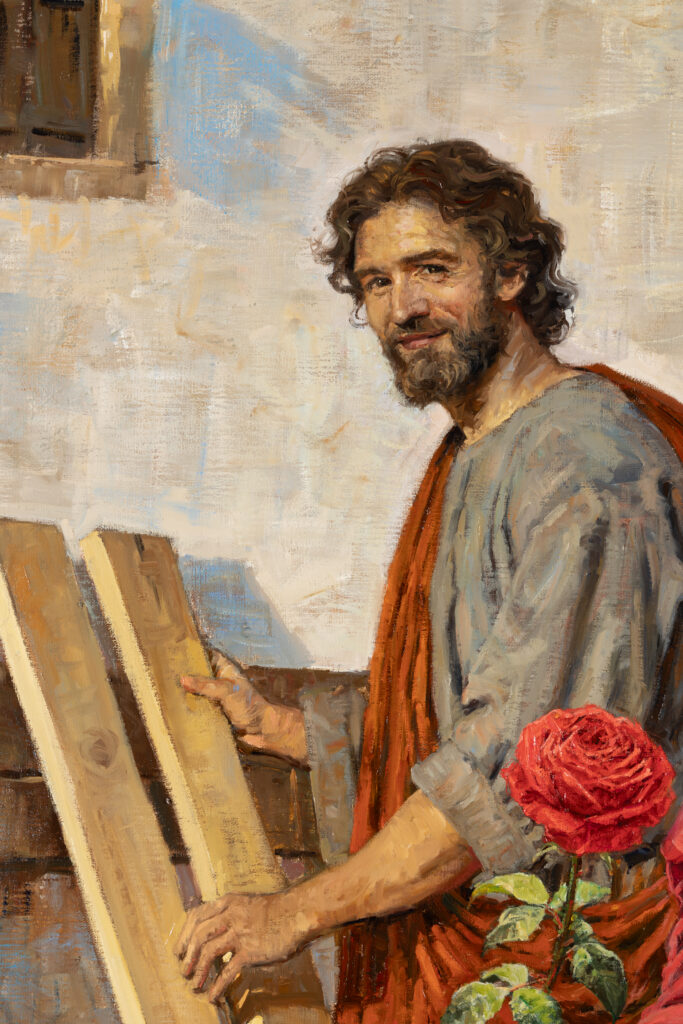
Alongside Mother and Son, and in the background, is St. Joseph. He has been working, but he pauses for a moment to look at us and offer a smile. It is a scene that I greatly enjoyed painting.
Mary wears a ring on one of her fingers, a symbol of purity and virginity. The ring represents “Fairest Love,” symbolizing her total and spotless surrender to God’s plans and her eternal covenant with Him.
Was the experience of creating this painting meaningful in any way?
It was certainly especially rewarding. I greatly enjoyed creating this work, largely because it portrays the Holy Family in an ordinary, intimate, and joyful moment.
Seeing Jesus, Mary, and Joseph sharing a family scene and radiating love made the creative process especially meaningful for me.
Is there anything else that comes to mind about this work that you would like to share with us?
I would like to express my gratitude to the Fairest Love Family Project for the confidence they placed in my work.
I am accustomed to creating paintings that are destined for many different places around the world. I paint them, and within a few months the canvases are shipped to their new homes. Because of that, I try not to become too attached to them, knowing that they must leave and fulfill their purpose wherever they are sent.
With Mary, Mother of Fairest Love, however, it was difficult to see it go. It is a large canvas that filled the studio space. For the last several months, whenever I entered the workshop each morning, the Holy Family was there looking at me, almost as if they were waiting for me with a smile.
I miss that.
My hope is that those who encounter this painting wherever it is displayed will experience something of that same feeling.
The art piece will debut this week in Los Angeles at the Cathedral of Our Lady of the Angels from June 16-June 23, 2026