
“It Takes Three to Get Married”: 10 Fulton Sheen Lessons Every Catholic Couple Should Know
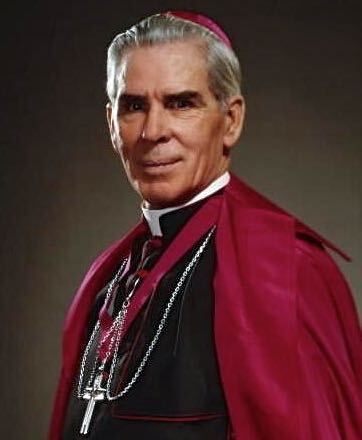
Archbishop Fulton J. Sheen was one of the most recognizable Catholic voices of the twentieth century. Millions heard him on radio and television, especially through his enormously popular program Life Is Worth Living. He was a gifted preacher, teacher, author, and evangelist whose ability to explain the Catholic faith made complicated theological truths accessible to ordinary people.
As the Church celebrates his beatification, much of Sheen’s extraordinary life and legacy will be rediscovered.
But married Catholics might want to begin with something he wrote more than 75 years ago.
In 1951, Sheen published Three to Get Married, a book about love, sexuality, marriage, parenthood, suffering, and the spiritual life of husband and wife. Its central argument is contained in its memorable title: Christian marriage was never intended to be lived by two people alone.
Husband and wife need God.
That may sound simple. Yet throughout the book, Sheen develops a vision of marriage that challenges many of the assumptions we still make about romantic love. He writes about the danger of confusing attraction with love, the impossible expectations spouses can place upon one another, the necessity of sacrifice, the dignity of the body, the gift of children, and the way marriage can lead two people toward holiness.
Many of his examples reflect the era in which he wrote, but the fundamental questions sound remarkably familiar.
What happens when the feelings change? Can another person really make us happy? Why does love become difficult? What is marriage for? And where is God when marriage does not look like the love story we imagined?
Here are ten lessons from Fulton Sheen that Catholic couples can still carry into their marriages today.
1. Love Is More Than a Feeling
Sheen begins Three to Get Married with a distinction modern couples still need to hear.
“Love is primarily in the will, not in the emotions.”
That does not mean emotions are unimportant. Attraction, affection, tenderness, excitement, and romance are beautiful parts of marital love. But none of them remains at the same intensity forever. Emotions naturally change across decades of marriage, particularly through demanding seasons of work, pregnancy, parenting, illness, grief, financial stress, aging, and ordinary exhaustion.
If love depends entirely upon feeling in love, every marriage eventually becomes vulnerable.
The vows exchanged at a Catholic wedding recognize this reality. A bride and groom do not promise to feel a particular emotion every day for the rest of their lives. They promise fidelity. They choose one another for whatever circumstances come next.
Sometimes love feels effortless. Other times it looks like getting up with the baby so your spouse can sleep, making dinner when you would rather collapse on the couch, apologizing first, sitting beside a hospital bed, listening to the same worry again, forgiving, remaining patient, or simply continuing to show up.
Those ordinary choices do not mean romantic love has disappeared. They may mean love is becoming something deeper than romance.
2. Your Spouse Cannot Be Everything You Need
We place enormous expectations on romantic relationships. We want a spouse to be our best friend, confidant, companion, emotional support, co-parent, adventure partner, intellectual equal, source of affirmation, and the person who understands us better than anyone else.
Many of those desires are good. But Sheen recognized a danger in expecting another human being to satisfy every longing of the human heart.
In Three to Get Married, he uses the image of two empty glasses that cannot fill one another. They require a source outside themselves. For Sheen, that source is God.
This changes the expectations we bring into marriage. Your spouse can love you profoundly and still misunderstand you. Your spouse can be faithful and still disappoint you. Your spouse can know you intimately and still be unable to heal every wound or satisfy every longing.
That is not necessarily evidence that you married the wrong person. It is evidence that you married a person.
When we expect another human being to occupy the place that belongs to God, we place an impossible burden on marriage. Bringing God into the center of marriage frees husbands and wives to love one another as human beings rather than demanding that the other become the answer to every desire of the heart.
3. It Really Takes Three to Get Married
This is the idea for which Sheen’s book is best remembered.
Marriage is not simply husband plus wife. For Christians, there is a third Person at the center of the relationship: God.
Sheen opens his book by reflecting on love as something that continually moves beyond two. He points to the Trinity, the Incarnation, and the Holy Family before turning to the love between husband and wife. The book itself is dedicated to Mary Immaculate, whom Sheen describes as the woman who taught the mystery of love.
Putting God at the center of marriage means more than having a church wedding, displaying a crucifix in the home, or identifying as a Catholic family.
It means allowing God into the actual marriage. Into the arguments. Into the finances. Into decisions about children. Into sexuality. Into careers. Into disappointments. Into Sunday mornings when getting everyone to Mass feels anything but peaceful. Into the seasons when husband and wife feel deeply connected and the seasons when they do not.
A Catholic marriage is not simply two people asking God to bless the plans they have already made. It is two people continually asking God to show them how to love one another according to His plans.
4. The Goal Is Not Simply to Stay Together, but to Become Holy Together
There is certainly something admirable about a marriage that endures for fifty or sixty years. But longevity alone is not the ultimate goal of Catholic marriage.
Marriage is a vocation.
Husband and wife are called to help one another become the people God created them to be. In Sheen’s vision, marriage is deeply connected to sanctification. Scepter summarizes this dimension of his thought as spouses growing into a richer unity, formed through God’s love rather than merely learning to tolerate one another.
That means a useful question for a married person is not simply, “Is my spouse making me happy?” It is also, “Am I helping my spouse become holy?” Does the way I speak encourage or diminish? Do I make it easier for my spouse to pray? Do I forgive? Do I challenge lovingly when necessary? Do I recognize the gifts God has placed in this person? Do I want my spouse’s good even when that good requires something from me?
Catholic marriage has an eternal horizon. Ultimately, husband and wife are trying to help one another get to heaven.
5. Love Requires Knowing the Other Person
One of Sheen’s beautiful insights is that love and knowledge deepen together.
At the beginning of a relationship, we learn facts. We discover someone’s family, interests, opinions, stories, dreams, habits, and personality. But decades of loving another person can create a different kind of knowledge.
Sheen observes that husbands and wives who have lived together for many years can develop a knowledge of one another that goes deeper than spoken words. Love itself teaches them to perceive what is happening in the other’s mind and heart.
That kind of knowledge, however, requires attention. You can live beside someone for years and stop being curious about them.
People continue changing after the wedding. The person you married at 25 is not exactly the person sitting across from you at 45 or 70. Experiences change us. Parenthood changes us. Loss changes us. Success and failure change us. Our relationship with God changes us.
Healthy marital love keeps asking: Who are you becoming? There is always more to know about someone you love.
6. Sacrifice Is Not Proof That Marriage Has Gone Wrong
Modern romantic stories often end at the wedding. Christian marriage begins there.
Eventually, every marriage encounters the Cross. There may be infertility, miscarriage, difficult pregnancies, financial problems, unemployment, illness, caregiving, struggles with children, grief, loneliness, aging parents, or dreams that never become reality.
There will also be the much smaller sacrifices of ordinary life, which may be where love is tested most frequently.
Sheen’s vision of marriage does not treat suffering as evidence that love has failed. Christian love necessarily involves self-gift, and self-gift costs something. This does not mean Catholics should romanticize dysfunction, tolerate abuse, or refuse appropriate help because suffering is supposedly good for them.
It means that a marriage cannot be judged solely by how easy it feels. Jesus shows us a love willing to give itself completely for the beloved. The Cross reveals that sacrifice and love are not opposites. Sometimes sacrifice is precisely what love looks like.
7. The Body Matters Because the Person Matters
Sheen dedicates significant attention in Three to Get Married to the relationship between physical attraction, sexuality, love, and the dignity of the human person. The book includes entire chapters on the differences between sex and love, purity, the dignity of the body, marriage, and generation.
His central concern remains relevant: a person must never become an object used for another person’s satisfaction. Catholic teaching about sexuality begins with something much larger than a list of rules. The human body has dignity because the human person has dignity.
Within marriage, physical intimacy is therefore meant to express something true: a complete gift of self. That vision asks more of married love than simple attraction. It calls spouses to tenderness, reverence, fidelity, patience, generosity, and concern for the good of the other.
The body is not separate from love. It speaks the language of love.
8. Marriage Is Meant to Become Fruitful
Sheen’s vision of marital love continually moves outward. Love does not exist merely to keep two people gazing endlessly at one another. Authentic love becomes fruitful.
For many married couples, that fruitfulness takes the beautiful and very concrete form of children. Sheen devotes chapters of Three to Get Married to generation, fatherhood, motherhood, children, and the home.
Children transform the love between husband and wife. The relationship that began with two people now becomes the foundation of a family in which new human beings learn what it means to love, trust, forgive, pray, sacrifice, and belong.
But marital fruitfulness should never be measured simply by counting children. Some couples experience infertility. Others lose children through miscarriage. Families encounter circumstances outsiders cannot see and should not presume to judge.
A marriage can remain profoundly fruitful through hospitality, service, spiritual parenthood, generosity toward extended family, involvement in parish life, mentoring, adoption, foster care, friendship, and countless other ways of making love generative.
9. Every Marriage Will Eventually Discover “For Better or for Worse”
“For better or for worse” can sound almost romantic on a wedding day. Then life supplies the specifics.
Sheen devotes one of the final chapters of Three to Get Married to precisely this reality. The book does not present marriage as a permanent state of romantic exhilaration. Its later chapters address suffering, loss, endurance, and the changes love undergoes over time.
There will be versions of your spouse you have not met yet. The newlywed may become the exhausted parent. The ambitious professional may lose a job. The healthy spouse may become sick. The confident person may enter a season of uncertainty. The person who once cared for everyone else may someday need to be cared for. The vows account for all of them.
Christian marriage says: I do not promise to love only the version of you standing beside me today. I promise to remain faithful to you through the versions of both of us that time will reveal.
That is one reason marriage requires grace. We cannot possibly know everything we are promising on the wedding day. God does.
10. The Best Marriages Point Beyond Themselves
Perhaps Sheen’s deepest lesson about marriage is that human love is never meant to end with itself.
We love another person deeply, but that love awakens an even greater longing. Sheen sees human love as something capable of leading us toward divine love. The more marriage becomes a genuine gift of self, the more it can reveal something about the God who is Love.
This means the greatest Catholic marriages are not necessarily the ones that appear perfect from the outside.
They are marriages through which other people encounter something of God. Children learn that forgiveness is possible because they watched their parents forgive. Friends discover generosity because there is always another chair at the table. A struggling couple finds hope because an older couple honestly shares what they survived. A husband cares tenderly for his wife through illness. A wife remains beside her husband through loss. A family prays together when there are no easy answers.
None of these moments is glamorous. But they reveal love. And that is ultimately what marriage is meant to do.
Fulton Sheen’s Advice Still Matters
More than seven decades have passed since Three to Get Married was first published in 1951. The culture surrounding marriage has changed dramatically since then. Some of Sheen’s language and examples unmistakably belong to his era.
But the deepest questions have not changed very much. How do we keep loving when feelings change? What do we do when another person disappoints us? How do we remain faithful when life becomes difficult? How do we make a marriage fruitful? How do we love another human being without expecting that person to become our entire world?
Sheen’s answer begins where his title does.
It takes three to get married.
A husband.
A wife.
And God.
When God remains at the center, marriage becomes more than a relationship designed to make two people happy. It becomes a vocation through which two imperfect people learn, slowly and sometimes painfully, how to give themselves away in love.
Perhaps that is part of what makes Sheen’s teaching particularly fitting for the mission of Mary, Mother of Fairest Love.
Sheen dedicated Three to Get Married to Mary Immaculate and repeatedly looked to the Holy Family as an image of love ordered toward God. Mary and Joseph’s family life was not free from uncertainty, sacrifice, hardship, or suffering. But Christ was quite literally at its center.
That remains a beautiful image for every Catholic home.