
Why Catholics Remember the Dead: Keeping the Memory of Loved Ones Alive
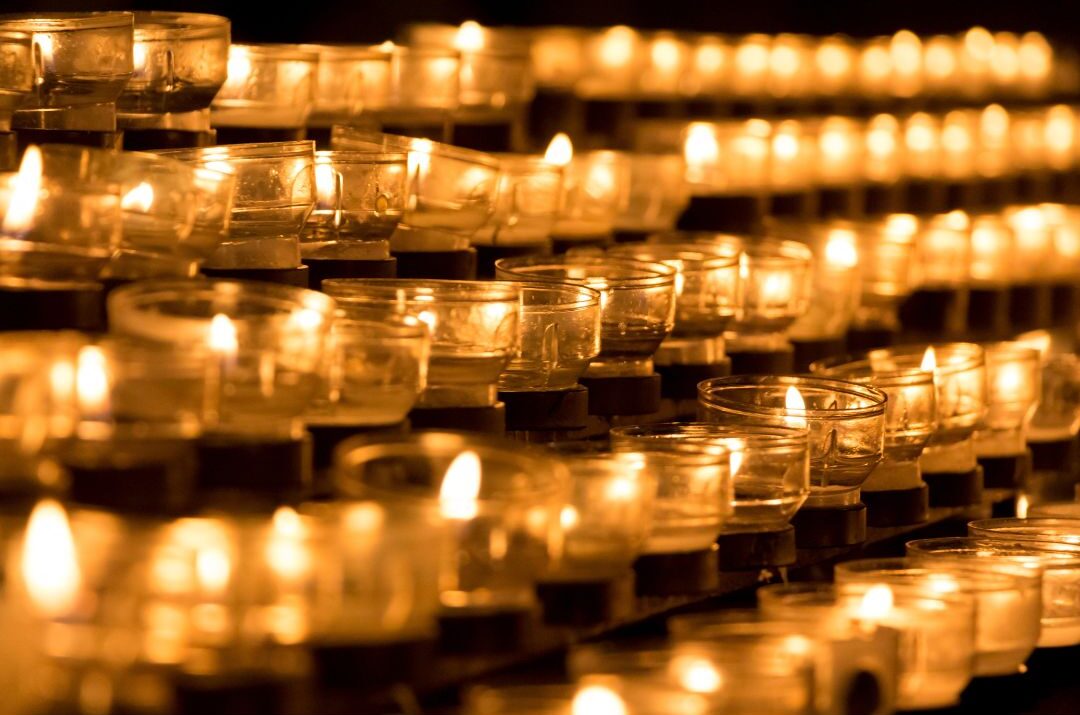
November begins with remembrance; remembering the dead. On November 1, the Church celebrates All Saints Day, rejoicing with the saints who have reached heaven. The following day, on All Souls Day, Catholics turn our attention toward the faithful departed, praying in a particular way for those who have died.
Throughout November, the Church continues this remembrance. Names of deceased loved ones appear in parish books. Families visit cemeteries. Masses are offered. We pray for parents, grandparents, spouses, children, siblings, friends, and generations of relatives we may never have known personally.
Death changes a relationship in the most painful and permanent of ways. There are no more phone calls, dinners, hugs, arguments, birthdays, or ordinary Tuesday afternoons together. Yet our love for the person does not disappear simply because that person has died.
Catholicism does not ask us to act as though it should. Instead, the Church gives us somewhere to put that love. We remember. We tell stories. We visit graves. We continue traditions. We have Masses offered. Most importantly, we pray.
For Catholics, remembering the dead is not an inability to let go of the past. It is an expression of love, communion, and our hope that in Christ, death does not have the final word.
All Souls Day Reminds Us That We Still Belong to One Another
The Catholic practice of praying for the dead makes sense within a much larger reality: the Communion of Saints.
The Church is not composed only of the Christians we can currently see around us. We remain united in Christ with the saints in heaven and with the faithful departed undergoing purification. Death is a real separation, and Christianity does not minimize its pain. Jesus Himself wept at the tomb of Lazarus.
But death does not sever the bonds created in Christ.
This is one reason All Souls Day can be such a consoling observance. The Church does not tell grieving people to stop thinking about those who have died. She does the opposite. She remembers them with us.
Tell Their Stories
One of the simplest ways of remembering loved ones who died is also one of the most important: keep telling their stories.
Tell your children what their grandfather was like when he was young. Make the recipe your mother always prepared at Christmas. Explain why your family says a particular prayer. Laugh about the vacation that went terribly wrong but became everyone’s favorite story. Pull out old photographs and tell children who the people in them were. This becomes especially important as generations pass.
Children may never meet the great-grandparents whose sacrifices shaped the family they were born into. They may not know the aunt whose generosity held everyone together during a difficult season or the grandfather whose conversion changed the spiritual direction of an entire family. Stories give them a connection to people they otherwise know only as names.
They also allow us to remember deceased loved ones as whole human beings. Grief can sometimes reduce a person’s story to the circumstances of his or her death, particularly after a long illness, accident, suicide, miscarriage, or another traumatic loss. But the person was more than the way he or she died.
Remember the laugh. The quirks. The favorite meal. The struggles. The generosity. The ordinary things that made this particular person irreplaceable.
Telling those stories is not living in the past. It is acknowledging that the people who came before us continue to be part of our story.
Keep the Traditions That Still Bring Life
After someone dies, traditions can become complicated. The first Thanksgiving without Dad may make his empty chair impossible to ignore. Christmas may feel wrong without Grandma making the dish she prepared every year. A birthday can suddenly become one of the hardest days on the calendar.
There is no single correct way to handle these moments.
Some traditions may feel comforting and worth continuing. Others may be too painful for a time. Families may discover that they need to change a tradition rather than abandon it entirely.
Perhaps someone learns Grandma’s recipe and makes it each Christmas. Maybe you light a candle before Thanksgiving dinner for family members who have died. Perhaps you visit the cemetery on a loved one’s birthday, have a Mass offered on the anniversary of a death, make a donation to a cause that mattered to the person, or tell one favorite story whenever the family gathers.
These practices do not need to become elaborate memorials.
Often the smallest traditions are the most meaningful because they quietly communicate: You are still part of our family story. We remember you.
Moving Forward Does Not Mean Leaving Someone Behind
One of the quieter fears within grief is the fear of forgetting.
At first, the person who died seems present everywhere. Their clothes are still in the closet. Their number is still in your phone. You instinctively think of something you want to tell them before remembering you cannot call.
Then time passes. You laugh again. You have a good day. Eventually, you may go hours or even days without consciously thinking about the person. New experiences happen that they were not here to witness. Children grow up. Families change. Life continues.
And sometimes that continuing can feel strangely like betrayal. But healing is not forgetting. Moving forward does not erase the relationship or diminish the significance of the person who died. Love changes after death because it must. It can no longer be expressed in exactly the same ways.
What About Loved Ones We Hope Are Already in Heaven?
Sometimes Catholics hesitate to pray for a deceased person because they strongly believe that person is already in heaven. We may say, “Grandma is definitely in heaven,” especially when someone lived a visibly holy life.
It is natural to hope for heaven. Christian funerals themselves are filled with hope in the Resurrection. But the Church does not ordinarily declare with certainty that a particular deceased person is in heaven unless that person has been canonized as a saint. That is why praying for our loved ones remains an act of both humility and love.
And our prayers are never wasted. We can entrust someone confidently to God’s mercy without needing to know precisely what has happened to that soul after death.
There is something beautiful about continuing to pray for someone we loved deeply on earth. Love does not demand certainty before it gives.
Mary Knows What It Means to Grieve Someone You Love
Mary, Mother of Fairest Love, also knows the pain of death.
She stood at the foot of the Cross and watched her Son die. She experienced the terrible human reality of loving someone whose body she could no longer hold onto. Yet Calvary was not the end of the story.
The Resurrection does not make the Cross unreal. It reveals that death does not have the final word.
That is the hope Christians bring into grief. We do not believe because we loved someone that we are entitled to know every detail of that person’s eternal destiny. We entrust them to a God who loves more perfectly than we ever could. And while we wait in hope, we pray.