
True Masculinity: Lessons From St. Joseph
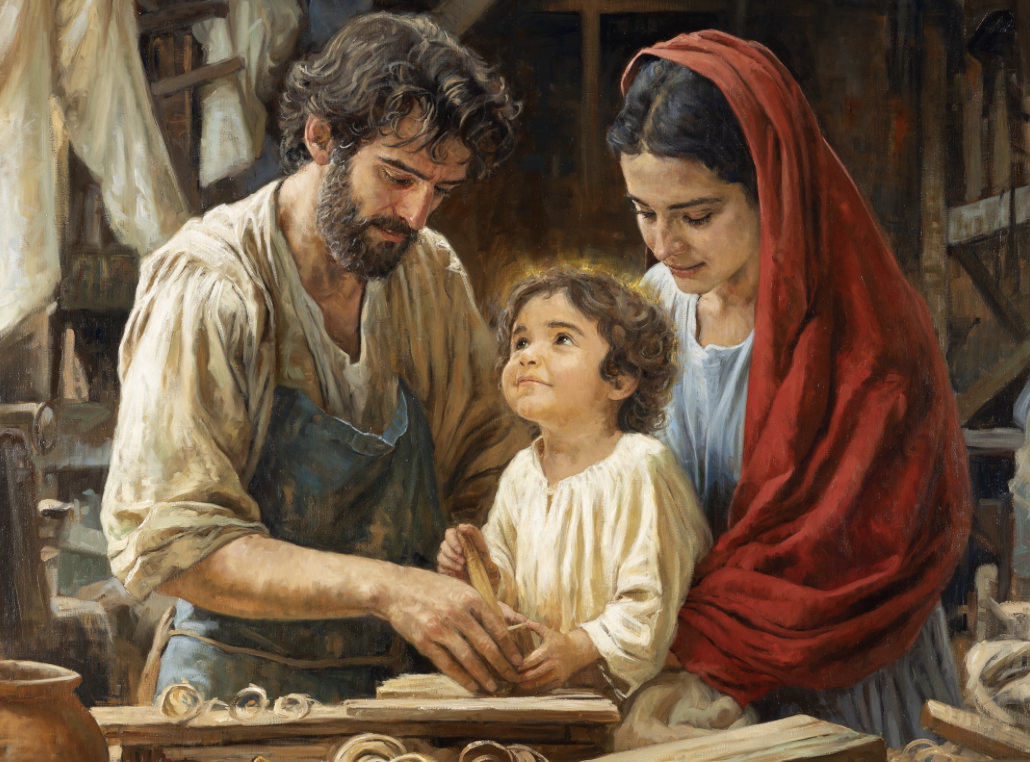
In recent years, the topic of masculinity has become a source of confusion and debate. But what does true masculinity look like?
Many young men today receive conflicting messages about what it means to be strong, responsible, and good. Some voices portray masculinity as something harmful that must be restrained, while others promote a vision of masculinity built around dominance, aggression, or self-assertion. In the midst of these competing ideas, many men are left wondering what authentic strength actually looks like.
The Catholic tradition offers a different and far more compelling vision.
Rather than defining masculinity by power or control, the Church points to a life rooted in virtue, responsibility, and self-giving love. This vision of true masculinity is perhaps most clearly embodied in the life of St. Joseph.
Though the Gospels record no spoken words from him, St. Joseph’s life communicates a powerful lesson about what it means to be a man. His quiet faithfulness, courage, and protective love reveal a model of strength that the modern world desperately needs.
Why Our Culture Is Confused About Masculinity
The confusion surrounding masculinity today did not arise overnight. Over the past several decades, cultural conversations about gender have shifted dramatically, leaving many men uncertain about their role in family life, society, and the Church.
Some cultural narratives suggest that traditional masculine virtues—such as courage, leadership, and responsibility—are inherently problematic. In reaction, other voices attempt to reclaim masculinity by promoting exaggerated forms of toughness or dominance. Both approaches miss the deeper truth.
Authentic masculinity is not about power over others, nor is it something that must be suppressed or ignored. Instead, masculinity finds its meaning when it is directed toward service, protection, and self-sacrifice.
The Catholic understanding of masculinity sees strength not as domination but as responsibility. A man’s strength is meant to protect the vulnerable, guide those entrusted to his care, and remain faithful even when circumstances are difficult.
Few figures illustrate this better than St. Joseph.
St. Joseph and the Strength of Silent Leadership
The Gospels reveal very little about St. Joseph’s life, yet what we do know speaks volumes.
Joseph was entrusted with an extraordinary mission: to care for Mary and raise the Son of God. From the beginning, his life required immense courage. When he learned that Mary was with child, Joseph chose compassion rather than judgment. After receiving God’s message in a dream, he accepted the responsibility placed before him and welcomed Mary into his home.
This pattern of attentive obedience continued throughout his life.
When an angel warned Joseph that King Herod sought to kill the child Jesus, Joseph immediately rose in the night and led his family into Egypt to protect them. Later, he returned to Nazareth and spent years providing for the Holy Family through his work as a carpenter.
Joseph never sought recognition for these sacrifices. His leadership was quiet but steadfast.
This is the heart of true masculinity Catholic tradition celebrates: a strength that protects rather than dominates, serves rather than demands, and remains faithful even when its sacrifices go unseen.
The Church has long recognized Joseph as a powerful model for fathers and men seeking to live their vocation well. Devotional resources dedicated to St. Joseph, including those offered by EWTN and other Catholic ministries, invite believers to deepen their relationship with the saint who guarded the Holy Family with such faithful care.
The Masculine Virtues St. Joseph Teaches Us
St. Joseph’s life reveals several virtues that define authentic masculinity.
First is responsibility. Joseph did not choose the extraordinary circumstances of his life, but he embraced them with courage. He accepted the role God entrusted to him and carried it out faithfully.
Second is protective love. Joseph’s actions consistently placed the safety and well-being of Mary and Jesus above his own comfort. His leadership was rooted not in authority alone but in genuine care for those entrusted to him.
Third is humility. Despite his unique role in salvation history, Joseph remained hidden. His life reminds us that true greatness often grows quietly through ordinary acts of love and service.
These virtues form the foundation of Catholic masculinity. A man’s strength is revealed not through control or recognition but through his willingness to love faithfully and sacrificially.
Why St. Joseph Matters Today
In a time when many men struggle to understand their role, St. Joseph offers clarity and hope.
His life shows that authentic masculinity is deeply connected to responsibility, faithfulness, and service. A man becomes strong not by seeking power but by protecting and guiding the people entrusted to his care.
The Church continues to emphasize Joseph’s importance for modern believers. In recent years, several reflections and teachings from the Vatican have highlighted his example as a model of fatherhood, humility, and trust in God’s providence.
These teachings remind us that Joseph’s quiet leadership remains profoundly relevant today.
For fathers raising children, husbands supporting their wives, and young men discerning their vocation, Joseph stands as a powerful witness to the beauty of a life lived for others.
The Strength the World Often Overlooks
St. Joseph’s life may appear ordinary at first glance. He was a carpenter who lived in a small town and quietly cared for his family.
Yet within that ordinary life we see a profound example of courage and love.
Joseph’s masculinity was not loud or self-promoting. It was steady, protective, and deeply faithful. His strength was expressed through responsibility, sacrifice, and unwavering trust in God.
In a culture still searching for a vision of manhood that leads to flourishing rather than conflict, St. Joseph offers a timeless answer.
True strength is found in love.
And in the silent leadership of St. Joseph, we discover the enduring beauty of Catholic masculinity.
Check out this prayer: