
Hospitality Is More Than Entertaining: How to Make People Feel Truly Welcome
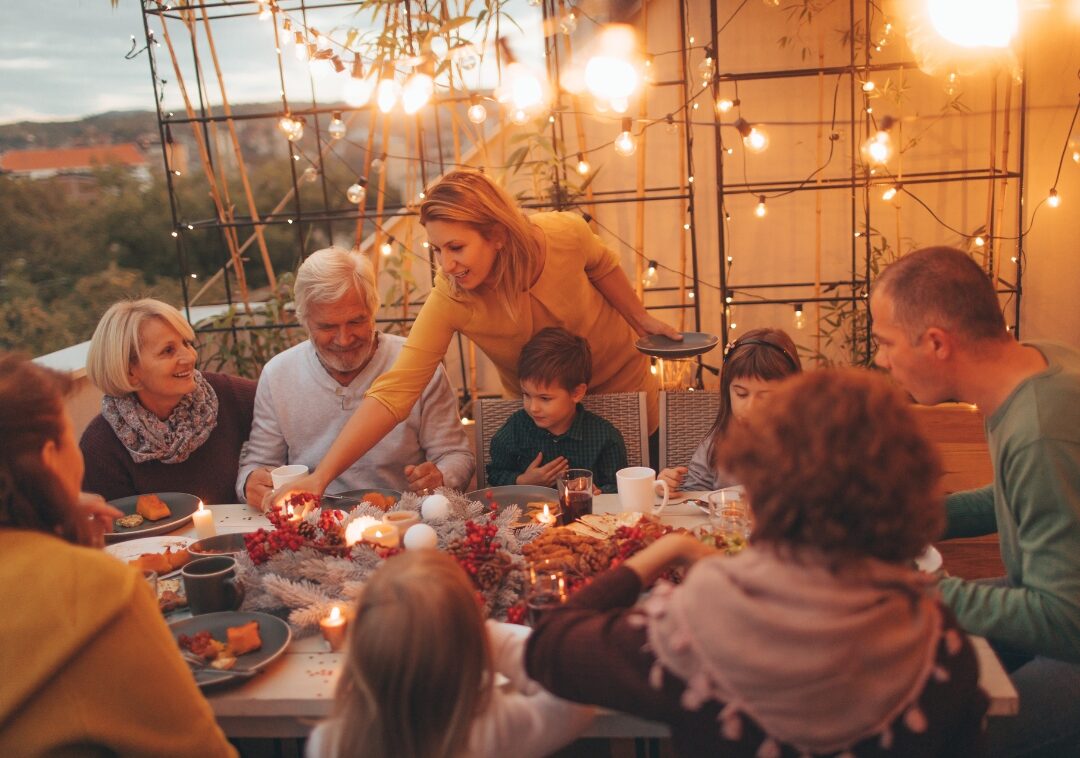
November marks the beginning of a season of gathering. Over the next two months, many of us will open our doors for Thanksgiving dinners, Advent gatherings, Christmas parties, overnight guests, cookie exchanges, family celebrations, and countless informal visits. We will plan menus, clean guest rooms, pull extra chairs from closets, set tables, buy groceries, and perhaps spend more time than we would like worrying about whether our homes look presentable.
There is something beautiful about preparing well for the people we love. A thoughtfully set table, a favorite recipe, fresh flowers, or a carefully planned celebration can all be expressions of love. Beauty and celebration have an important place in Catholic life.
But somewhere along the way, hospitality can quietly turn into performance. Instead of asking, “How can I make these people feel loved?” we begin asking, “What will they think of my house?” Instead of enjoying the people gathered around the table, we spend the evening worrying about whether dinner turned out correctly. Instead of opening our homes more often, we wait until the house is clean enough, the furniture is nicer, the children are better behaved, or we finally have enough space.
Christian hospitality invites us to something much simpler and much more profound. Entertaining says, “Look what I’ve prepared for you.” Hospitality says, “There is room for you here.”
As we enter a season filled with opportunities to gather, perhaps November is the perfect time to rediscover what Christian hospitality really means.
Hospitality Has Always Been Part of the Christian Life
Hospitality is not simply a personality trait possessed by people who enjoy cooking or throwing parties. It is woven throughout Scripture. Abraham welcomes strangers and discovers that he has entertained messengers from God. Jesus repeatedly shares meals with others, often with people who would not have made the guest lists of respectable society. Martha and Mary open their home to Christ. Zacchaeus receives Jesus joyfully. The first Christians gather in one another’s homes to pray and break bread.
The Letter to the Hebrews offers a particularly beautiful instruction: “Do not neglect hospitality, for through it some have unknowingly entertained angels” (Hebrews 13:2). Christian hospitality begins with the recognition that the person standing at our door is not an interruption to the important work of life. The person is important. When we welcome another human being, we have an opportunity to receive someone created in the image and likeness of God. That makes hospitality much more than entertaining. It makes it an act of Christian love.
Entertaining and Hospitality Are Not the Same Thing
There is nothing wrong with entertaining. It can be delightful to create a beautiful table, prepare an impressive meal, decorate for Christmas, or spend hours making a favorite family recipe. The problem arises when the preparation becomes more important than the people.
Entertaining tends to focus on what we provide. Hospitality focuses on what the other person receives. Did the new person have someone to talk to? Did the parents with small children spend the entire evening worried that their children were bothering everyone? Did the person who came alone feel like an extra at a table full of couples? Did the grieving widow feel as though there was still a place for her in traditions she once shared with her husband? Did our guests leave impressed by us, or did they leave knowing they were loved? Those questions move hospitality from presentation to presence.
Sometimes the most hospitable gathering is the beautifully planned Thanksgiving dinner with the good china and a table set days in advance. Sometimes it is pizza eaten from paper plates because a friend desperately needed somewhere to go.
You Do Not Need the “Right” Kind of Home to Practice Hospitality
One reason we postpone hospitality is because we imagine we need certain things first. We tell ourselves we will invite people over when we have a bigger dining room, a better kitchen, more matching dishes, a guest bedroom, more money, a spouse, children, or a house instead of an apartment.
But Christian hospitality has never depended upon square footage or marital status.
A single woman can invite friends into her apartment for soup after Mass. A college student can make room around a cramped table for someone who cannot travel home for Thanksgiving. A young married couple can order pizza and invite another couple over even though half their furniture is secondhand. A family with six children can add another family to a table that is already loud and crowded. An elderly widow can invite a neighbor for coffee. A priest can make the rectory a place where people experience warmth and welcome.
This is particularly important within Catholic communities, where conversations about “the home” can sometimes unintentionally become synonymous with married couples raising children. Marriage and family life offer extraordinary opportunities for hospitality, but they do not have a monopoly on it.
Every Christian has been given something that can be shared. Maybe it is a large dining room and a table that seats twelve. Maybe it is a couch and a pot of coffee. Maybe it is simply an hour and a willingness to listen.
Hospitality does not require a particular vocation. It requires making room.
Christian Hospitality Notices Who Might Be Left Out
As Thanksgiving and Christmas approach, most of us instinctively think about the people we always invite. Family comes home. Old friends gather. Traditions repeat. There is something beautiful about those familiar rhythms.
Christian hospitality, however, also asks us to look toward the edges.
Perhaps there is someone in your parish who recently moved to town and has no family nearby. Maybe a young adult cannot afford to travel home for Thanksgiving. A widow may be approaching her first Christmas without her husband. Someone recently divorced may suddenly find herself excluded from gatherings she attended for years as part of a couple. A family raising a child with significant disabilities may find large social events difficult to navigate. An international student may be thousands of miles from home. Someone estranged from family may simply be hoping no one asks what he is doing for the holidays.
We do not necessarily need to invite every person we know to Thanksgiving dinner. Sometimes hospitality means inviting someone for dinner the week before, dropping off dessert, asking an elderly neighbor to join us for coffee, or including a new parishioner in an Advent gathering.
Hospitality Is a Culture of Life in Practice
During October, we reflected on what it means to build a culture of life. Hospitality is one of the most tangible ways to continue living that commitment.
A culture of life cannot simply be an abstract belief that every human being possesses dignity. Eventually, that belief has to become concrete. It means making room for actual people, with all the needs and inconveniences that accompany human relationships.
If we say that children are gifts, our hospitality should make room for the family with toddlers, even knowing there may be crumbs under the table and interruptions during dinner. If we believe elderly people retain their dignity when they become dependent, we should be willing to slow down the conversation so an aging relative can keep up. If we believe people with disabilities belong fully in our communities, our first question should be what would make participation possible rather than assuming inclusion will be too difficult. If we believe the lonely person matters, we should notice when someone is standing alone.
Welcoming human life ultimately means welcoming actual human beings.
Not idealized people. Not only easy guests. Not simply people who look like us, live like us, or fit neatly into our plans. Real people arrive with dietary restrictions, crying babies, mobility challenges, complicated family histories, grief, differing opinions, awkward personalities, and occasionally very muddy shoes.
Hospitality makes room anyway.
Making People Feel at Home
So what does this look like practically, especially as we head into the busiest entertaining season of the year?
It might begin by simply inviting people before everything is perfect. If we wait until our home, finances, schedule, cooking skills, and family life are exactly as we want them, we may wait forever. There is something deeply welcoming about allowing people to encounter our real lives rather than a carefully staged version of them.
Good hospitality also requires thinking about the people who are coming before planning the gathering itself. A guest with limited mobility may need a different seating arrangement. Parents of young children may relax considerably if you tell them beforehand that their children are genuinely welcome. Someone grieving a recent loss may appreciate an invitation while also needing permission to decline at the last minute. A guest with dietary restrictions will feel cared for when someone asks rather than making the issue embarrassing at the table.
Once people arrive, hospitality is often expressed through small acts of attention. Introduce the person who does not know anyone and offer a natural point of connection. Notice when someone has been left out of the conversation. Let your children participate by answering the door, taking coats, offering drinks, or helping younger guests. Allow people to help in the kitchen if doing so makes them feel more at home.
And perhaps most importantly, stop apologizing for your house.
The toys in the corner, the mismatched chairs, the unfinished project, or the kitchen that has not been renovated probably bothers you much more than it bothers your guests. When we continually apologize for our homes, we can inadvertently communicate that the appearance of the space matters more than the people who have entered it.
A hospitable home does not have to be impressive.
It has to be generous.
What Jesus Teaches Us About the Table
Some of the most memorable moments in the Gospels happen around meals.
Jesus eats with tax collectors and sinners. He accepts invitations into people’s homes. He feeds crowds. He allows Himself to be interrupted. He notices people whom others overlook. Again and again, the table becomes a place of encounter.
At the Last Supper, the table becomes the setting for an even greater gift: the Eucharist.
There is something profoundly Christian about gathering around a table and making room for another person. The table says: stay awhile. Eat. Tell me what is happening in your life. You do not have to earn your place here.
This is why hospitality can become something much deeper than a social skill. It trains our hearts to receive people. It asks us to move outside ourselves, notice another person’s needs, and offer what we have for that person’s good.
The meal itself might be elaborate or incredibly simple. What matters is the love with which another person is received.